
Recent federal tax law changes may create meaningful opportunities for retirees and near-retirees beginning in 2025.
If you are age 65 or older, you may qualify for an additional federal income tax deduction that could reduce your taxable income over the next several years. The provision is scheduled to apply from 2025 through 2028.
Here’s what that means in practical terms.
A New Federal Deduction for Seniors
Under the updated law, eligible seniors may receive an additional deduction on top of the existing standard deduction.
The additional amount is:
- $6,000 for single filers
- $12,000 for married couples filing jointly
To qualify, you must be age 65 or older by year-end, and income limits apply based on Modified Adjusted Gross Income (MAGI).
The deduction begins to phase out at:
- $75,000 MAGI for single filers (fully phased out at $175,000)
- $150,000 MAGI for joint filers (fully phased out at $250,000)
For qualifying households, this effectively lowers taxable income, which may reduce overall federal tax liability.
While the numbers are straightforward, the planning impact can be more nuanced — especially when coordinated with other retirement income decisions.
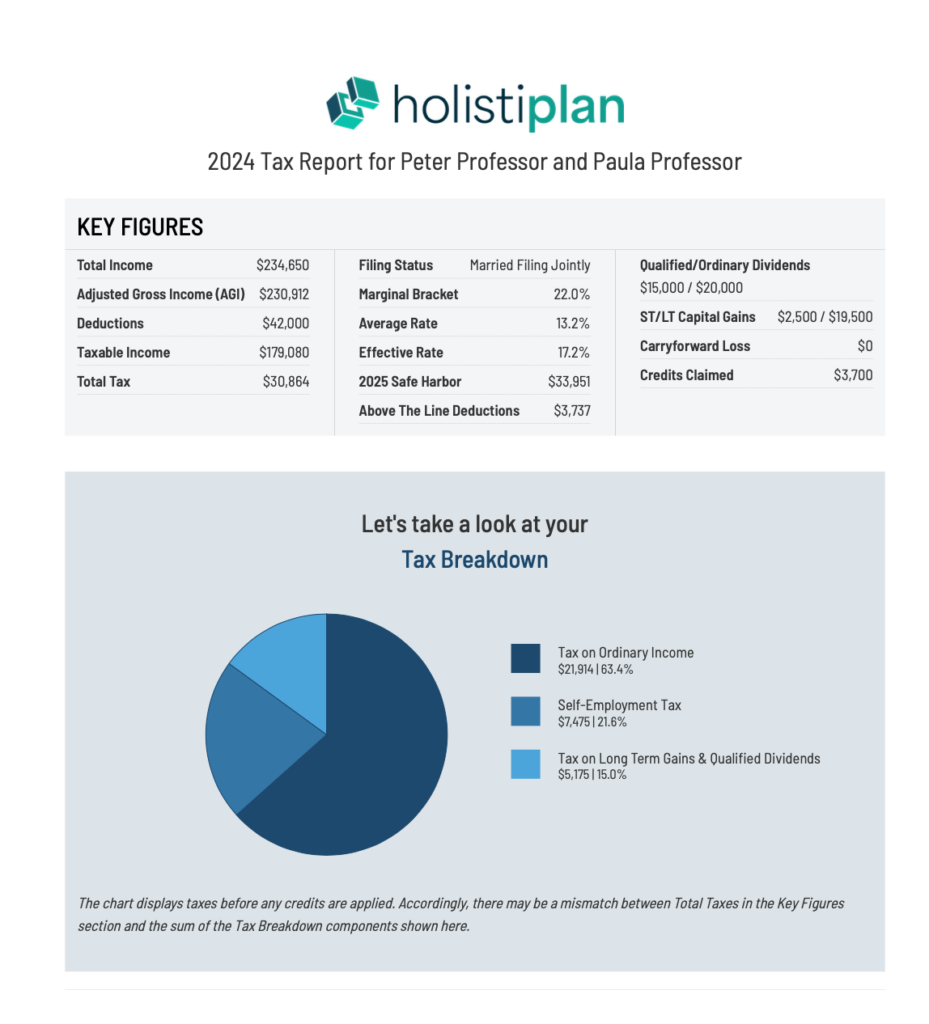
Why Coordination Matters
A lower taxable income can influence more than just your federal tax bill. It may affect how we structure:
- Social Security claiming strategies
- Retirement account withdrawals
- Roth conversion timing
- Medicare premium exposure (Part B and Part D IRMAA thresholds)
For retirees and those approaching retirement, income planning is interconnected. Adjustments in one area can ripple into others.
That’s why we view this deduction not as a standalone benefit, but as one piece of a broader retirement income strategy.
Property Tax Relief Opportunities (Illinois Example)
In addition to federal changes, many states and counties offer property tax relief programs for seniors. While programs vary by state, Illinois provides a helpful example of what may be available.
In Cook County, the Senior Homestead Exemption can reduce the assessed value of a qualifying home by up to $8,000, which lowers property taxes for eligible homeowners age 65 and older.
Some counties also offer property tax deferral programs, allowing qualifying seniors to defer a portion of property tax payments, often subject to income limits. In certain cases, deferrals may be available for several thousand dollars per year.
Because these programs are administered locally, eligibility rules and application deadlines vary. We typically recommend confirming details with your county assessor’s office or treasurer.
Even modest property tax reductions can meaningfully improve annual cash flow in retirement.
How to Access the Federal Deduction
The additional senior deduction would be claimed directly on your federal tax return (Form 1040), assuming you meet the age and income requirements.
However, simply qualifying does not automatically mean you are optimizing around it. The timing of income — including retirement withdrawals, capital gains, and conversions — may determine how much of the benefit you ultimately receive.
The Bigger Picture
Tax law changes rarely operate in isolation.
For retirees, the real opportunity lies in coordination. When federal deductions, retirement distributions, Social Security timing, Medicare premiums, and property taxes are aligned strategically, the cumulative impact can be significant.
These changes may provide meaningful tax savings for retirees and near-retirees between 2025 and 2028 — but the value depends on thoughtful planning.
If you would like to review how these new rules apply to your situation, or simply want to discuss your broader retirement income strategy, we would be happy to schedule a conversation.
Proactive planning — not reactive decisions — is what creates long-term confidence.